
Medical Device Registration in Indonesia: Process and Cost
Medical device registration in Indonesia means obtaining an izin edar, a distribution permit issued by the Ministry of Health through its medical device directorate (Ditjen Farmalkes). Foreign manufacturers cannot apply directly: you need a local distributor holding a PAK license, or your own PT PMA with the right business classification. Devices are sorted into Class A, B, C or D by risk, and the paperwork, testing and timeline all scale with that class. Expect the process to run from a few months to over a year.
- What medical device registration actually covers
- Cost and timeline by device class
- Who needs an izin edar, and who can apply
- How devices are classified in Indonesia
- The registration process step by step
- Documents you need before you start
- Common mistakes in medical device registration
- Frequently asked questions
What Medical Device Registration in Indonesia Actually Covers
Medical device registration in Indonesia is handled by the Ministry of Health, not by BPOM. This confuses a lot of people coming from markets where one agency handles everything health related. BPOM regulates drugs, cosmetics and food. Medical devices, in-vitro diagnostics and household health products (PKRT, things like antiseptic wipes or condoms) sit under Kemenkes through its Directorate General of Pharmaceuticals and Medical Devices. If you send your dossier to the wrong agency you lose weeks before anyone tells you.
The end result of the process is an izin edar: a registration number tied to a specific device model, its manufacturer, and the Indonesian entity named as the registration holder. Without that number, the device cannot legally be imported, advertised, sold or used in a clinical setting anywhere in the country, regardless of what approvals it already holds in the US, Europe or elsewhere.
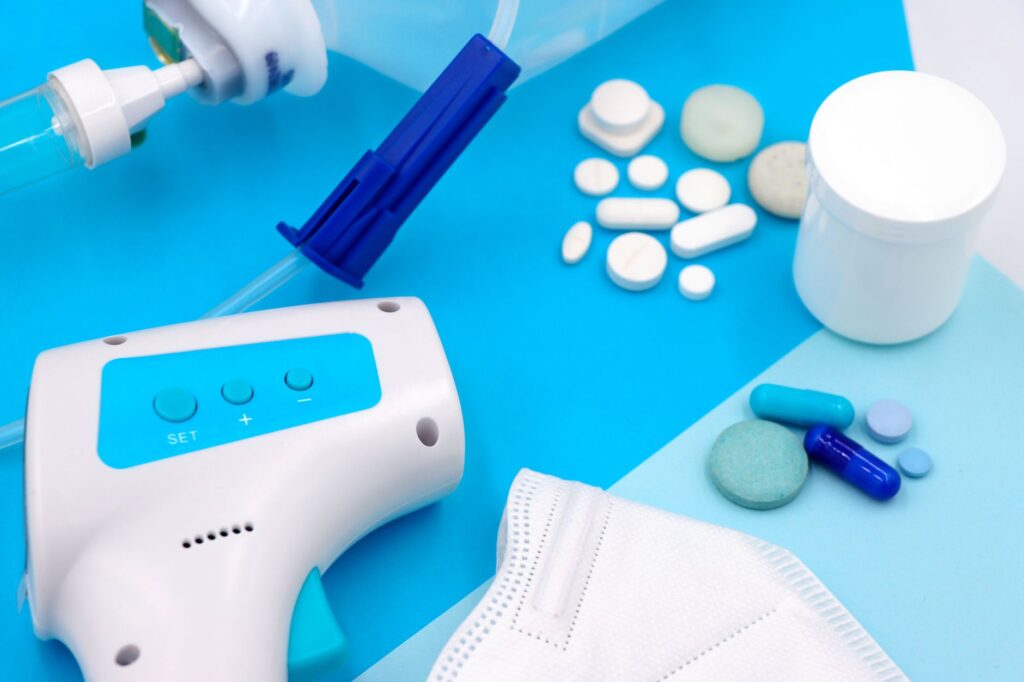
Medical Device Registration in Indonesia: Cost and Timeline
There is no single published price for medical device registration in Indonesia because the cost structure has several moving parts, and two of the biggest ones, the distributor fee and the consulting fee, are negotiated rather than fixed. What is predictable is how the timeline scales with risk class. Low-risk devices clear faster because the dossier is lighter and the review queue is shorter. High-risk devices, implants, diagnostic imaging equipment, anything life-sustaining, go through a heavier technical review and usually involve more rounds of queries from the ministry.
| Risk class | Typical examples | Dossier scope | Typical processing time |
|---|---|---|---|
| Class A | Bandages, tongue depressors, basic surgical instruments | Light, mostly administrative | Roughly 2 to 4 months |
| Class B | Infusion sets, hearing aids, some diagnostic devices | Moderate technical file plus labeling review | Roughly 4 to 6 months |
| Class C | Ventilators, dialysis equipment, most imaging devices | Full technical file, clinical evidence summary | Roughly 6 to 9 months |
| Class D | Implants, life-support equipment, high-risk IVDs | Full technical file, clinical data, possible local testing | Roughly 9 to 12+ months |
Treat these as working ranges, not promises. Actual timing depends on how complete your dossier is on first submission and how busy the ministry's review queue is that quarter. On cost, here is what actually makes up the bill:
| Cost component | What it covers | How it's typically priced |
|---|---|---|
| Government filing fee | Ministry of Health review of the application | Set by Kemenkes, varies by class, confirm the current schedule before budgeting |
| Local distributor or agent fee | Sponsoring the application through their PAK license | Often a revenue share or a fixed annual fee, negotiated per distributor |
| Legal or consulting fee | Dossier compilation, technical file translation, liaison with the ministry | Depends on device class and how complete your source documents already are |
| Label and IFU translation | Certified Bahasa Indonesia versions of labeling and instructions for use | Usually a fixed fee per device model |
Ask any provider, including us, for a written itemized quote before signing anything. A quote that bundles government fees, distributor fees and professional fees into one round number usually hides which part is negotiable.
Who Needs an Izin Edar in Indonesia
Anyone who wants to import, distribute, advertise or sell a medical device in Indonesia needs the device covered by a valid izin edar before it enters the market. That includes manufacturers selling through a local partner, hospitals importing specialist equipment for their own use in some cases, and distributors who take over an existing product line. There is no general exemption for low volume or for devices already cleared in your home country.
The practical question is who applies. A foreign manufacturer with no Indonesian legal presence cannot hold the izin edar itself. You need one of two routes:
- Work through a local distributor that already holds a PAK (Izin Penyalur Alat Kesehatan) license. They become the registered holder of the izin edar on your behalf, under a distribution agreement that should spell out who owns the registration if the relationship ends.
- Set up your own PT PMA with the correct business classification to import and distribute medical devices, then obtain your own PAK license before applying. This takes longer and costs more upfront, but you control the registration and are not dependent on a third party's good faith.
If you go the PT PMA route, you will also need work permits and residence permits for any foreign director or technical staff who relocate to run the operation. That is a separate legal process from the device registration itself, and it is worth planning both at the same time rather than discovering the gap after your company is incorporated. Our guide to the work permit and residence visa process in Indonesia covers what a foreign director or technical hire needs to be legally resident and employed.
How Medical Devices Are Classified in Indonesia
Indonesia classifies medical devices into four risk classes, A through D, broadly in line with the ASEAN Medical Device Directive that most of Southeast Asia follows. The classification is not a formality: it decides how thick your dossier needs to be, whether you need local clinical data, and roughly how long the ministry takes to review it.
- Class A, low risk. Devices with minimal patient contact or risk if they fail. Registration is close to a notification process.
- Class B, low-moderate risk. Devices with more invasive or sustained contact, still generally well understood and low complication rate.
- Class C, moderate-high risk. Devices that monitor or support a vital function, or that carry a meaningful risk if they malfunction.
- Class D, high risk. Implants, life-support systems, and devices where failure poses a direct threat to life.
Get the classification wrong at the start and you either under-document a high-risk device, which gets rejected on review and sends you back to the beginning, or you over-prepare a low-risk one, which wastes time and consulting budget you did not need to spend.
The Registration Process Step by Step
The process looks different in detail depending on class, but the shape is consistent across all four:
- Confirm classification and the route to market. Decide whether you are registering through a distributor's PAK license or your own PT PMA, since this affects who signs the application.
- Compile the technical file. This typically includes the certificate of free sale from the country of origin, the manufacturer's ISO 13485 certificate, existing clearances such as a CE mark or FDA clearance, instructions for use, and labeling.
- Translate and localize labeling. Labels and instructions for use must be rendered into Bahasa Indonesia and meet local labeling requirements before submission.
- Submit through the ministry's electronic registration system. The dossier is lodged online with the local PAK holder as the applicant of record.
- Respond to queries. It is normal for the ministry to come back with questions or requests for additional documents, particularly for Class C and D devices. Slow responses here are the most common cause of registrations dragging past a year.
- Receive the izin edar and AKL or AKD number. AKL applies to devices manufactured in Indonesia, AKD to imported devices distributed locally. The number is what customs and health authorities check.
- Keep post-market obligations current. Adverse event reporting, labeling updates, and renewal ahead of the five-year expiry are ongoing obligations, not one-off tasks.
Documents You Need Before You Start
Gathering these before you approach a distributor or a consultant will shorten the process more than anything else:
- Certificate of free sale (or equivalent) from the device's country of origin
- ISO 13485 quality management certificate for the manufacturer
- Existing regulatory clearance such as a CE mark, FDA 510(k), or equivalent, where it exists
- Full technical specifications and instructions for use in the original language
- Clinical evaluation data, required more heavily for Class C and D devices
- A signed letter of authorization naming the Indonesian distributor or PT PMA as your local representative
- Product photographs and packaging artwork
If any of these do not exist yet, that is the real driver of a longer timeline, not the ministry's processing speed.
The single most expensive mistake: letting your izin edar be registered permanently in your distributor's name without a written agreement on what happens if you switch distributors. In Indonesia the registration certificate usually sits with the local PAK holder, not the foreign manufacturer. If that relationship sours or the distributor loses its license, you can be forced to start the entire registration process again from zero with a new partner, even though your device hasn't changed at all. Get the ownership and transfer terms of the registration written into the distribution agreement before you ever submit the dossier, not after.
Common Mistakes in Medical Device Registration in Indonesia
Beyond the distributor ownership trap above, the mistakes we see repeat across foreign device companies entering Indonesia are fairly consistent:
- Importing before the izin edar is granted. Devices held at customs without a valid registration number can be seized or destroyed, and the resulting flag against your company name makes future applications slower.
- Submitting labeling in English only. Bahasa Indonesia labeling and instructions for use are a requirement, not a nice-to-have, and missing or poor translations are a frequent cause of rejection on first review.
- Underestimating Class C and D documentation. Companies that have an easy time registering a Class A device often assume a high-risk device will move at the same pace. It will not.
- Treating the izin edar as permanent. It generally runs for five years. Renewal needs to start well before expiry, because a lapsed registration takes the device off the market until it is reinstated.
- Not planning the legal side of setting up locally. If you are going the PT PMA route rather than a distributor, the company setup, the PAK license, and the work permits for any relocating staff all need to move in parallel, not one after the other.
If part of your plan involves foreign staff relocating to Bali or Jakarta to manage the local entity, it is worth reading our guide to work visas and KITAS in Bali alongside your registration timeline, since both processes have their own queues and both affect when you can actually start selling.
Frequently Asked Questions
How long does medical device registration take in Indonesia?
Processing time depends on device risk class. Class A devices, the lowest risk, can be registered in roughly two to four months. Class D devices, the highest risk such as implants or life-support equipment, often take nine months to over a year. These are typical ranges only, actual timing depends on how complete your dossier is and the Ministry of Health's current processing queue.
How much does medical device registration cost in Indonesia?
There is no fixed public price list covering every case. Costs include a government filing fee set by the Ministry of Health, a fee or revenue share for the local distributor holding the PAK license, translation of labeling and instructions into Bahasa Indonesia, and consulting or legal fees for preparing the technical file. Ask any provider for a written, itemized quote before you commit.
Can a foreign company register a medical device in Indonesia directly?
No. A foreign manufacturer cannot hold an izin edar directly. You must register through a local distributor that holds a valid PAK license, or set up your own PT PMA with the correct business classification to import and distribute the device. Most foreign manufacturers start with a local distributor and only set up their own entity once sales justify it.
What is the difference between AKL and AKD registration numbers?
AKL applies to medical devices manufactured inside Indonesia, while AKD applies to devices imported from abroad and distributed locally. Both are registration numbers issued by the Ministry of Health once the izin edar is granted, and both require a dossier scaled to the device's risk class. The letters mark where the device was made, not its risk level or market access rights.
Do I need a PT PMA to sell medical devices in Indonesia?
Not necessarily. Many foreign manufacturers enter the market through a local distributor who already holds a PAK license, which avoids setting up a company at all. A PT PMA becomes worthwhile if you want to control the registration yourself, sell directly rather than through a distributor's margin, or plan a long-term presence with your own staff and warehousing in Indonesia.
What is izin edar for medical devices?
Izin edar is the distribution permit issued by the Ministry of Health that allows a medical device to be legally imported, marketed and sold in Indonesia. No device, from a basic thermometer to an MRI machine, can lawfully enter the Indonesian market without one. It is tied to a specific device model, manufacturer, and the local party registered as its holder.
How long is a medical device registration valid in Indonesia?
An izin edar is generally valid for five years from the date of issue. Renewal should start well before expiry, since a lapsed registration means the device can no longer be legally distributed until it is reinstated. Confirm the current renewal window and requirements with the Ministry of Health or a local consultant, as administrative rules are updated periodically.
What happens if I sell a medical device in Indonesia without registration?
Selling or importing a medical device without a valid izin edar breaches Indonesian health regulations. Consequences can include the device being held or destroyed at customs, administrative fines, forced market withdrawal, and difficulty getting any future application approved. Distributors and clinics caught using unregistered devices face their own penalties too, which is why reputable distributors insist on seeing the certificate before stocking a product.
Medical device registration in Indonesia sits at the intersection of health regulation and company law, and the two sides need to move together if you want a working market entry rather than a stalled dossier. If you are weighing up a local distributor against setting up your own entity, or need the company structure and the staffing permits sorted alongside the registration itself, our team at The Bali Lawyer handles both sides of this from our base in Bali. You can see the full range of what we cover on our home page, including company setup, licensing and immigration work for foreign businesses operating in Indonesia.